Rosin Heads Is Redefining Cannabis Product Launches Through Storytelling With Its Conspiracy Series

Back-to-back ADCANN award winner continues to redefine what a cannabis product launch can look like.
In Canadian cannabis, most brands are still competing on strain names, THC percentages, and incremental product updates.
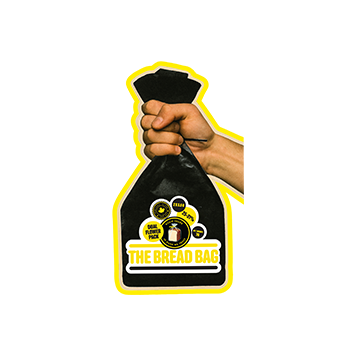
Rosin Heads has been playing a different game entirely. Fresh off consecutive ADCANN wins for Best Packaging Design – first for its now-iconic PB&J Bread Bags, and again in 2025 for the culturally rooted Baller Box – the brand has built a reputation for doing something few others have managed in the legal market: translating legacy cannabis culture into fully compliant, retail-ready experiences without losing authenticity.
Where many brands treat packaging as a constraint, Rosin Heads treats it as the starting point. Their latest launch, the Conspiracy Series, makes that philosophy even clearer.
The Conspiracy Series: Packaging as World-Building
At its core, the Conspiracy Series is still a flower drop. But the way it’s structured turns it into something much closer to a themed release – the kind more commonly seen in streetwear or collectible culture. Each bag is built around a central idea.
The first release explores the “narrative of control,” pairing two strains tied to conspiracy themes: mind control and population control. It’s a concept that opens the door to a broader universe; one where each future drop can expand into new narratives, references, and cultural touchpoints.
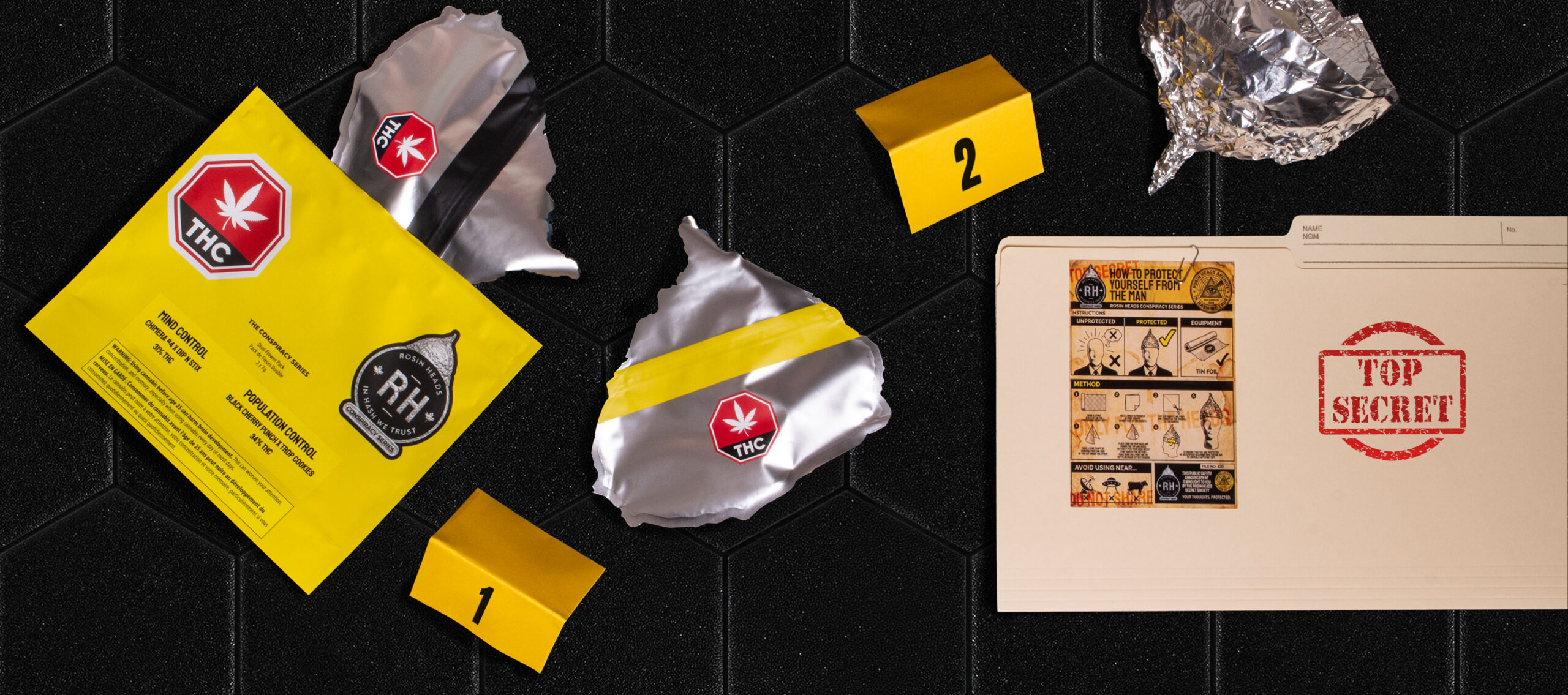
Visually, the packaging leans fully into that world. A bright yellow outer bag features the Rosin Heads logo reworked with a tinfoil hat, immediately signalling the theme. Inside, two individually packaged strains mirror the concept, differentiated by colour-coded striping. It’s playful, but intentional. More importantly, it’s memorable in a category where most packaging is designed to blend in.
Extending the Experience Beyond the Product
Where the Conspiracy Series really separates itself is in how it extends the experience beyond purchase.
Inside each bag:
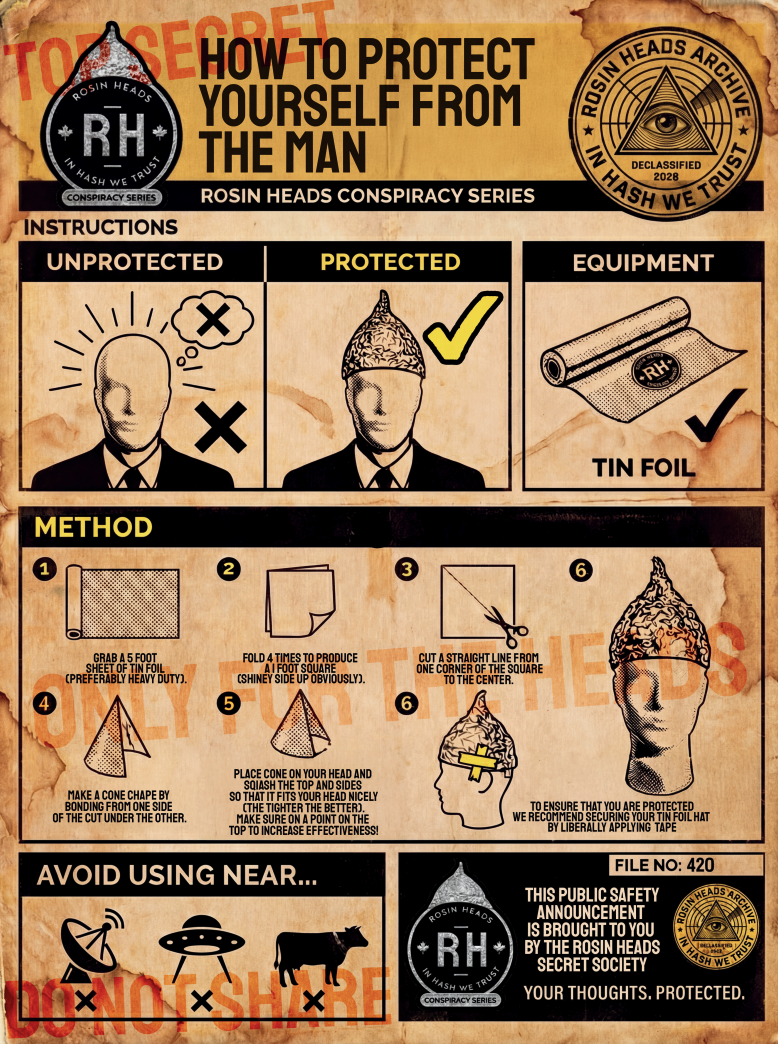
- A postcard showing how to make your own tinfoil hat
- A custom sticker sheet tied to the theme
It’s a small detail — but it shifts the role of packaging entirely. Instead of ending at the point of sale, the product continues into interaction. Consumers are encouraged to engage, create, and participate – not just consume. That idea carries into a broader campaign, where buyers can submit their own tinfoil hat creations for a chance to win limited Rosin Heads merchandise, including branded rugby shirts. The result is something most cannabis brands struggle to achieve: organic engagement that isn’t forced or transactional. Early reactions suggest it’s working. The conversation isn’t limited to the product; it’s expanding into the themes themselves, with people actively engaging in the concept behind the drop. That’s a signal most brands never reach.

Building Community at the Retail Level
At the same time, Rosin Heads is applying that same thinking to retail. The launch is supported by the Rosin Heads Secret Society, a budtender-focused program designed to turn retail staff into active participants in the brand.
The concept is simple, but effective:
- Budtenders sign up for access to a private network
- Clues and coded visuals are shared through Instagram Close Friends
- Participants decode the content for a chance to win exclusive merchandise
The rewards (namely embroidered and silkscreened rugby shirts) are thoughtfully designed but less important than the mechanism itself. Rather than pushing product knowledge top-down, Rosin Heads is creating curiosity-driven engagement. Budtenders aren’t just being told what the product is, they’re discovering it. In a retail environment where staff influence is critical, that strategy matters.
Leading a Shift in Cannabis Packaging
Since the release of Rosin Heads’ PB&J, the market has already started to respond.
More brands are experimenting with shaped bags, more distinct colour systems, and more expressive packaging formats. It’s a sign that the category is beginning to move (slowly) toward more creative execution. Rosin Heads continues to stay a step ahead by evolving the framework itself.
The Conspiracy Series introduces a model that goes beyond packaging innovation:
- Themed product drops
- Narrative-driven concepts
- Interactive elements
- Community activation across both consumers and retail
It’s a playbook that treats cannabis products less like static SKUs, and more like evolving cultural releases.


What Rosin Heads Understands That Others Don’t
In a regulated market, differentiation is often framed as a limitation. Rosin Heads approaches it differently. By grounding its products in culture first – and building compliant formats around that – the brand has created something that feels increasingly rare in cannabis: releases that people actually care about beyond what’s inside the bag. The Conspiracy Series reinforces that position. Not as a one-off idea, but as the next step in a system the brand has been building for years.